The invisible crisis already inside your company
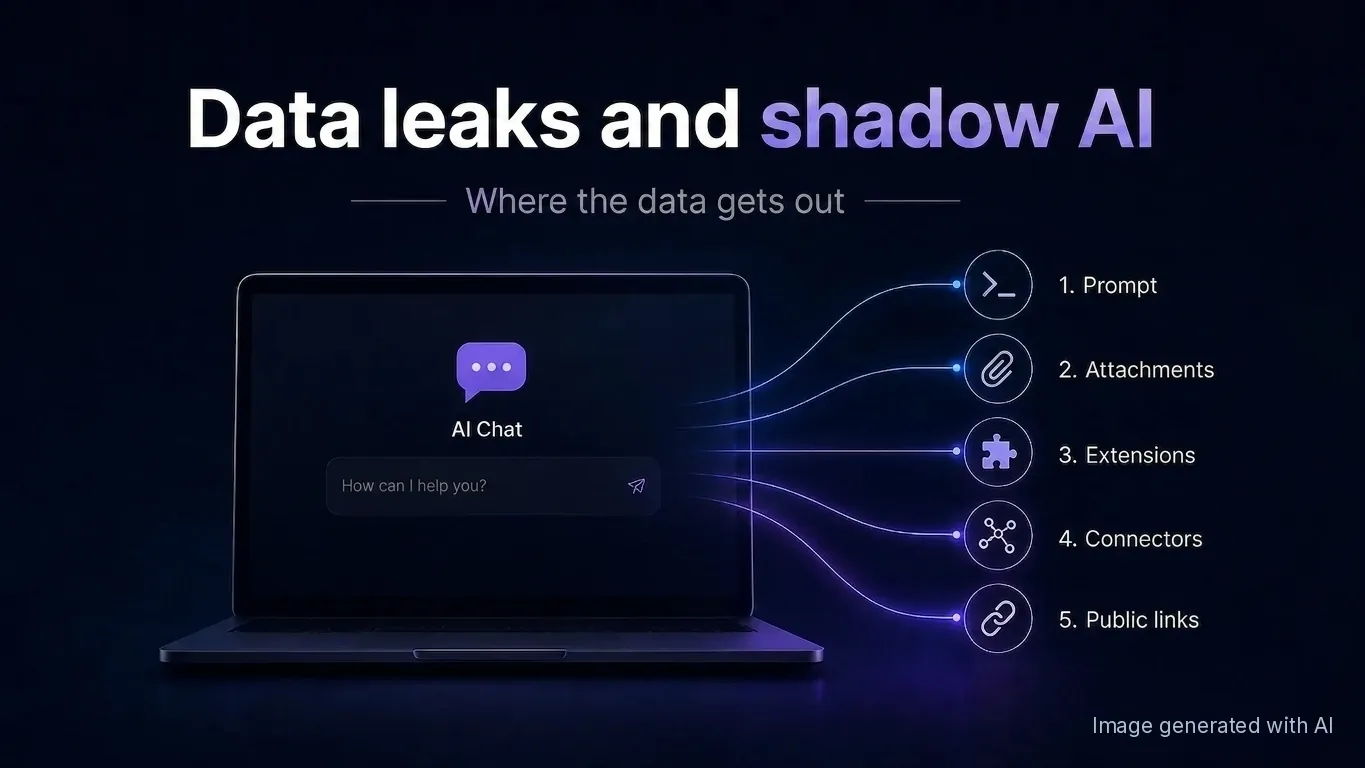
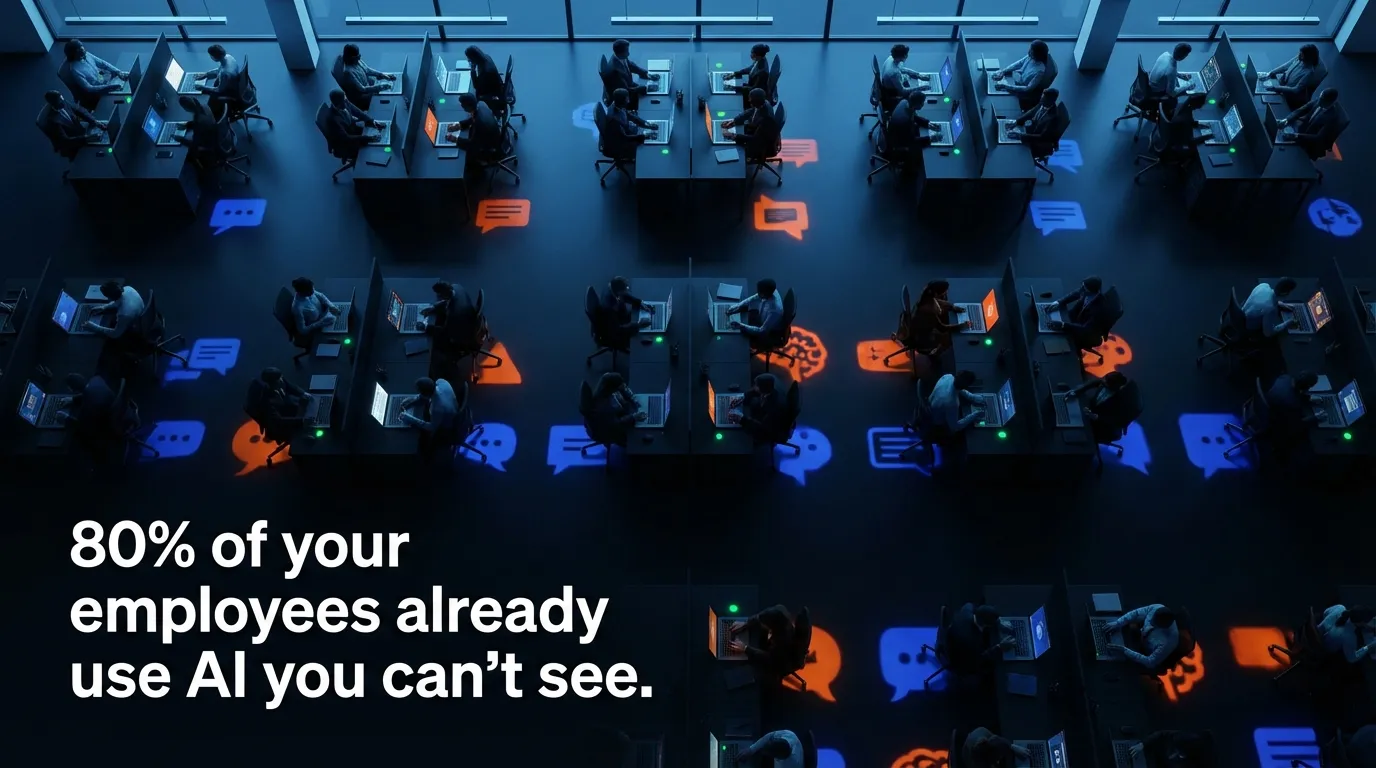
80% of workers — including nearly 90% of security professionals — use unapproved AI tools at work. 68% of employees use personal accounts to access free AI tools, with 57% inputting sensitive data.
We're not talking about a future risk. This is happening right now, in your company, as you read this.
The numbers that should keep you up at night
The IBM 2025 Cost of a Data Breach Report found that 1 in 5 organizations suffered a breach directly caused by shadow AI, at an average cost of $4.63 million per incident — $670,000 more than standard breaches.
- Shadow AI usage increased 156% from 2023 to 2025
- The average company experiences 223 sensitive data incidents per month related to AI apps — double the prior year
- Web traffic to GenAI sites hit 10.53 billion monthly visits in January 2025, up 50% year-over-year
- Enterprises average 1,200 unofficial AI applications running in their environments
The Samsung warning nobody heeded
In 2023, Samsung engineers pasted proprietary semiconductor source code into ChatGPT within 20 days of the ban being lifted — three separate leaks, secrets absorbed into training data, emergency ban reinstated.
Three years later, the problem has metastasized. And your company is no different.
Shadow AI is the #1 driver of insider risk costs
The DTEX/Ponemon 2026 report found annual insider risk costs reached $19.5 million per organization, with 53% ($10.3 million) driven by non-malicious actors — primarily shadow AI negligence.
- Shadow AI breaches take approximately one week longer to detect and contain
- 97% of organizations experiencing AI-related incidents lacked proper AI access controls
The EU AI Act: the clock is ticking
As of February 2025, prohibited AI practices are already enforceable with fines up to €35 million or 7% of global annual turnover. August 2026 brings enforcement of high-risk system rules and transparency obligations. See the full EU AI Act text.
Organizations cannot demonstrate compliance with transparency, human oversight, or risk management requirements if their AI systems are invisible.
- 64% of companies aren't ready for the AI Act
- Only 37% have any AI governance policies at all
Banning AI doesn't work — governance does
Research shows nearly half of employees continue using personal AI even after bans. But when enterprises provide approved alternatives with proper governance, unauthorized usage drops 89%.
Microsoft just launched "Shadow AI protection" in Edge for Business (announced March 23, 2026 at RSAC). The market has validated that the answer is governance infrastructure, not prohibition.
The financial case for governance is settled
- Organizations with mature AI governance report 45% fewer security incidents
- Resolve breaches 70 days faster
- Reduce data leakage by up to 46%
- Companies using AI-powered security defenses save $2.22 million per breach
- ISO 42001 certified organizations experience 60% fewer AI-related disruptions
- 72% of enterprise buyers now screen for ISO 42001 during procurement
You cannot govern what you cannot see. Moviwa makes invisible AI visible, uncontrolled AI controllable, and non-compliant AI auditable — before August 2026.